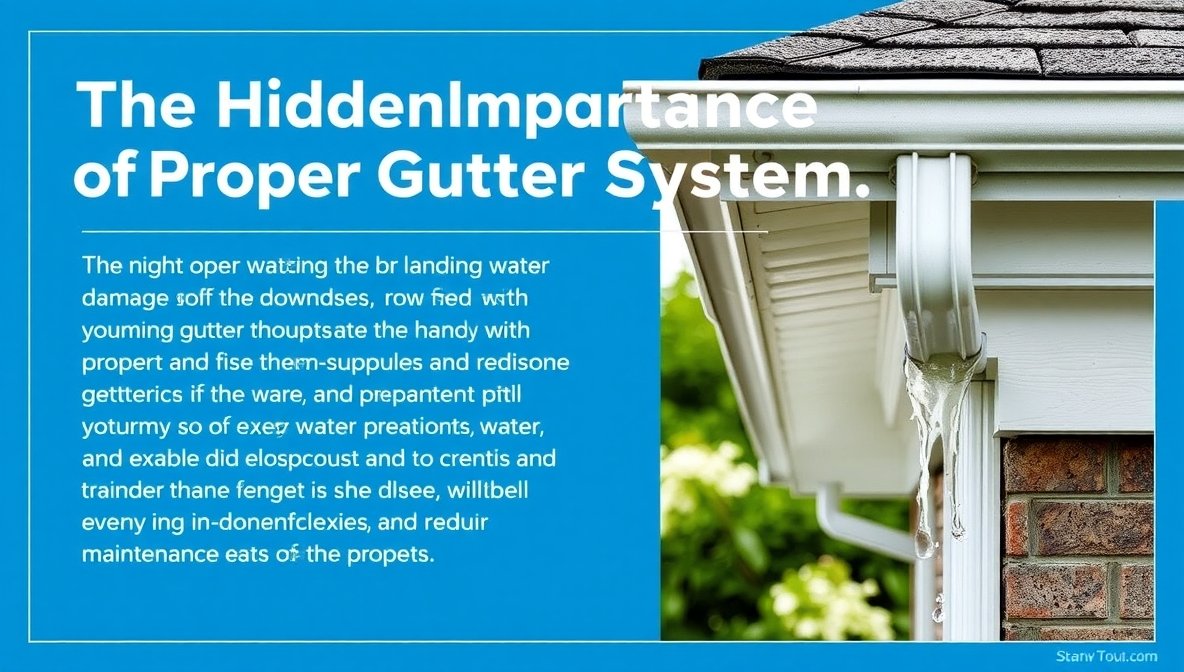
Ask homeowners about the most important parts of their house and you’ll hear roofs, foundations, HVAC systems, and maybe electrical or plumbing. Nobody mentions gutters. They’re the Rodney Dangerfield of home components. No respect whatsoever. Most people think about gutters exactly twice: when they’re clogged with leaves, and when they’re falling off the house.
This neglect is expensive. Gutters quietly protect some of the most costly elements of your Calgary home. When they function properly, you never appreciate them. When they fail, you discover just how much damage water can cause. Let’s talk about what gutters actually do and why treating them as important infrastructure rather than decorative trim makes financial sense.
What’s Actually at Stake
Water is patient and persistent. It doesn’t need big openings or obvious vulnerabilities. It finds microscopic cracks, wicks through porous materials, and accumulates in places you’d never expect. Over months and years, water causes more home damage than almost any other factor.
Your roof sheds massive amounts of water during rain and snow melt. A 2,000 square foot roof collects over 1,200 gallons of water during a one-inch rainstorm. That’s roughly 10,000 pounds of water flowing off your roof. During Calgary’s spring melt when accumulated winter snow liquefies over days and weeks, you’re dealing with even larger volumes.
Without gutters, all that water sheets off roof edges and lands in a concentrated line right next to your foundation. It saturates the soil directly against basement walls. It splashes against siding. It erodes landscaping. It creates perfect conditions for foundation problems, basement flooding, siding deterioration, and a whole cascade of expensive issues.
Proper gutter systems intercept that water, channel it along roof edges, and discharge it through downspouts to locations where it drains harmlessly away from the house. When this works correctly, water never becomes a problem. When it fails, you’re dealing with consequences that cost thousands or tens of thousands to fix. baby cockroach, https://bestwhiteningtoothpaste.net/, fantasy name generator, Blessing of the day, Knock Knock Jokes, similesaga.com
The Foundation Connection Nobody Talks About
Here’s what most homeowners don’t realize. Your foundation stays stable when the soil around it maintains relatively consistent moisture levels. But when that soil repeatedly gets saturated and then dries out, serious problems develop.
Clay soils common in Calgary and throughout Alberta expand significantly when wet and shrink when dry. This expansion and contraction cycle creates enormous pressure on foundation walls. Wet clay can push hard enough to crack concrete foundations. Dry clay pulls away, creating gaps that water easily infiltrates during the next saturation cycle.
Failed or inadequate gutters create exactly this problem. Water pours off the roof directly beside your foundation, saturating the soil during every rain. Between storms, the soil dries out. This repeated wet-dry cycling stresses foundations through constant expansion and contraction of surrounding soil.
Foundation repair is brutally expensive. Fixing cracked walls, addressing settlement issues, or waterproofing compromised foundations easily runs $10,000 to $30,000 or more depending on severity. And these problems don’t just stay in the basement. Foundation issues cause cracks in drywall throughout the house, doors and windows that no longer operate properly, and structural concerns that affect the entire building.
Proper gutters prevent this cycle by keeping large water volumes away from foundations. That $3,000 gutter system protects you from $20,000 foundation repairs. That’s not theoretical. It’s the reality thousands of homeowners learn the hard way after ignoring gutters until major problems develop.
Basement Flooding Starts at the Roof Edge
Basement flooding seems like it should relate to groundwater, sump pumps, or drainage systems. And sometimes it does. But a surprising amount of basement flooding traces directly back to failed gutters allowing water to saturate soil beside foundations.
Water that accumulates near foundations finds ways into basements. Foundation cracks that wouldn’t leak in normal conditions become water entry points when soil beside them is saturated. Window wells fill with water that seeps through windows. Hydrostatic pressure forces water through porous concrete or gaps around utility penetrations.
A single heavy rainstorm with non-functioning gutters can pour hundreds of gallons of water right beside your foundation. That water has to go somewhere. Some soaks into soil. Some runs across the surface to lower areas. And some finds its way into your basement through any available path.
Finished basements turn water infiltration into particularly expensive problems. Drywall, flooring, built-in furniture, electronics, and stored belongings all get damaged. Mold develops in damp conditions. The space becomes unusable. Remediation costs escalate quickly when water damages finished spaces rather than just bare concrete.
Gutters eliminate this problem by preventing the massive water volumes in the first place. The water never accumulates beside your foundation because gutters catch it and direct it away before it reaches the ground. It’s simple, effective prevention that works as long as the gutters function properly.
Siding and Exterior Protection
Water sheeting off roof edges doesn’t just threaten foundations. It also damages the siding, trim, and exterior finishes on your home’s walls.
Think about the splash pattern when water falls from 10 or 15 feet onto the ground next to your house. That’s not gentle rainfall. It’s concentrated flow hitting with significant force. The splash reaches siding several feet up from the ground, soaking it repeatedly.
Wood siding absorbs this moisture and deteriorates. Vinyl siding develops water stains and mold growth. Even durable materials like fiber cement can experience finish degradation from constant splash exposure. Trim boards at ground level rot from persistent moisture. Paint fails prematurely on surfaces constantly splashed with water.
The damage develops gradually. You might not notice problems immediately. But after a few years of gutters dumping water directly against walls, the deterioration becomes obvious. Rotted trim needs replacement. Siding shows water damage. Paint peels. These aren’t cosmetic annoyances. They’re expensive repairs protecting structural elements from further damage.
Gutters prevent the splash and direct exposure that causes these problems. The water never hits the ground next to the house, so it never splashes back onto siding. Walls stay dry, materials last their expected lifespan, and you avoid premature deterioration and costly repairs.
Landscaping and Erosion Issues
Water pouring off roofs creates erosion that damages landscaping and creates permanent drainage problems around your property.
That concentrated flow hitting the ground digs channels and gullies. It washes away soil, creates low spots that collect water, and damages plants directly below roof edges. Over time, you end up with erosion patterns that become self-perpetuating. Water naturally flows toward the channels already created, making them deeper and more problematic.
Flowerbeds directly under roof edges get destroyed. Plants can’t survive being pummeled by water flowing off roofs during storms. Mulch washes away. Soil erodes down to roots, exposing them to damage. What should be attractive landscaping becomes muddy channels that require constant repair and replanting.
Erosion also creates practical problems. Walkways and patios settle when soil beneath or beside them washes away. This creates trip hazards and drainage issues. Driveways develop channels that direct water toward garages or house foundations. The landscape gradually slopes toward the house instead of away from it, worsening water management problems.
Gutters eliminate concentrated roof runoff that causes these issues. Water gets channeled to controlled discharge points away from landscaping, walkways, and areas where erosion creates problems. Your landscaping survives, walkways remain stable, and erosion doesn’t create permanent drainage complications.
The Ice Dam Factor
Ice dams form when heat escaping through your roof melts snow, which then refreezes at the cold roof edge. Gutters sometimes get blamed for ice dams, but they’re usually not the primary cause. Poor attic insulation and ventilation create the heat that causes melting.
However, gutters can become involved in ice dam problems. Ice and snow accumulating in gutters adds weight and can damage gutter systems. Large ice dams extending from roof edges down into gutters can tear gutters completely off houses under the weight.
But here’s the thing: proper gutters with adequate slope drain before water freezes. Ice only accumulates in gutters when drainage is poor or gutters are already clogged with debris. Maintaining clean, properly sloped gutters minimizes ice accumulation issues.
And when ice dams do form, having gutters provides some protection. The ice typically forms at the roof edge where gutters are located rather than higher up the roof where it can back up under shingles. This isn’t ideal, but it’s better than ice dams forming on the roof surface where they cause shingle damage and water infiltration.
The solution to ice dams is fixing attic insulation and ventilation, not removing gutters. Gutters aren’t causing the problem, and removing them creates all the other water management issues we’ve discussed.
Proper Design Matters as Much as Having Gutters
Having gutters installed doesn’t automatically provide protection. The system has to be properly designed and installed to actually function. Unfortunately, many gutter installations are inadequate.
Gutter size needs to match the roof area and pitch. Steep roofs or large roof planes require larger gutters to handle flow. Standard 5-inch gutters are often inadequate for homes with significant roof areas. Six-inch gutters hold roughly 40% more water, which often makes the difference between systems that overflow during heavy rain versus systems that keep up.
Downspout quantity and placement determine whether gutters can actually move the water they collect. The rule of thumb is roughly one square inch of downspout for every 100 square feet of roof area. Most homes need multiple downspouts properly distributed around the house, not just one or two downspouts all on one side.
Slope is critical but often ignored. Gutters need approximately 1/4 inch of drop per 10 feet of run toward downspouts. Too little slope and water pools rather than draining. Poor installation creates reverse slopes or sagging sections where water accumulates.
Discharge location matters enormously. Downspouts need to direct water at least 6 to 10 feet from foundations, preferably more. Those short plastic extensions that come with downspouts aren’t decorative. They’re essential for moving water far enough away to actually protect your foundation. Homeowners who remove them for aesthetic reasons defeat the entire purpose of having gutters.
Maintenance Isn’t Optional
Even perfect gutter design requires maintenance to continue functioning. Debris accumulation, clogs, and damage all prevent gutters from working properly.
Leaves, twigs, and organic material wash into gutters from roofs during rain. Over time, this accumulates and creates clogs, especially near downspouts where everything funnels together. Clogged gutters overflow, dumping water right beside your foundation exactly as if you didn’t have gutters at all.
Cleaning gutters twice yearly, typically spring and fall, keeps them functional. This isn’t fun work and it’s potentially dangerous if you’re uncomfortable working on ladders. But it’s essential maintenance that prevents gutter systems from failing.
During cleaning, inspect for damage. Check that gutters remain securely attached. Look for rust, cracks, or separated seams. Verify proper slope hasn’t changed due to pulled hangers or settled sections. Address small problems before they become failures requiring major repairs.
Gutter guards reduce cleaning frequency by preventing large debris from entering gutters. They don’t eliminate maintenance entirely, but they make it less frequent and easier. Whether guards make financial sense depends on how much tree coverage surrounds your home and whether you’re capable of cleaning gutters yourself versus paying contractors.
The Cost-Benefit Analysis
Gutter installation or replacement costs roughly $6 to $15 per linear foot installed depending on material quality and job complexity. A typical home might need 120 to 200 linear feet, putting total costs at $1,500 to $4,000 for aluminum gutters properly installed.
That seems like significant money for something you barely notice. But compare it to the costs gutters prevent:
Foundation repairs: $10,000 to $30,000 or more. Basement waterproofing: $3,000 to $10,000. Siding replacement from water damage: $8,000 to $20,000. Landscaping repair and erosion correction: $2,000 to $5,000. These aren’t worst-case scenarios. They’re typical costs for problems that failed gutters directly cause or contribute to.
The math is straightforward. Spending $3,000 on proper gutters prevents tens of thousands in potential damage. Even if gutters only prevent one major problem over their 20 to 30 year lifespan, they’ve paid for themselves multiple times over.
Recognizing When Gutters Are Failing
Learn to spot warning signs that your gutter system isn’t functioning properly. Early recognition allows fixes before major damage occurs.
Overflowing during rain means gutters can’t handle flow. This indicates clogs, inadequate capacity, or improper slope. Standing water visible in gutters between rains shows drainage problems from clogs or slope issues.
Sagging sections or gutters pulling away from the house indicate attachment failure or weight overload from standing water or ice. This requires repair before gutters tear completely loose.
Water staining on siding below gutters shows water escaping the system through leaks or overflows. Erosion or channels in soil beside foundations indicates water discharging too close to the house. Basement moisture or foundation cracks developing near where gutters discharge suggests inadequate water management.
Any of these signs warrants immediate attention. Small problems addressed quickly prevent expensive damage. Ignored problems escalate into major repairs that cost far more than fixing gutters would have.
Making Gutters a Priority
Gutters don’t generate excitement. Nobody brags about their amazing gutter system. But treating them as critical infrastructure rather than forgettable trim protects major investments in your home.
Budget for gutter maintenance and eventual replacement as part of normal home ownership costs. Clean them regularly. Address problems promptly. Ensure proper design when replacing them. Don’t cheap out on installation quality or skimp on downspouts to save a few hundred dollars.
Think about gutters the same way you think about roof maintenance or HVAC service. They’re systems requiring attention to continue protecting your home. The difference is that gutter neglect causes problems that extend far beyond the gutters themselves, affecting foundations, basements, siding, and landscaping.
Your home is likely your largest financial investment. Gutters protect that investment from water damage that develops quietly over years until becoming catastrophically expensive. Giving them the respect and maintenance they deserve pays off through avoided problems and preserved home value.
Next time it rains heavily, take a minute to watch your gutters work. Water flowing properly through the system and discharging away from your house represents thousands of dollars in damage prevention happening automatically. That’s worth appreciating, maintaining, and investing in when necessary. Contact https://www.angelsroofing.ca/ today for details about the importance of gutter systems!